Author: admin

  • Presentology

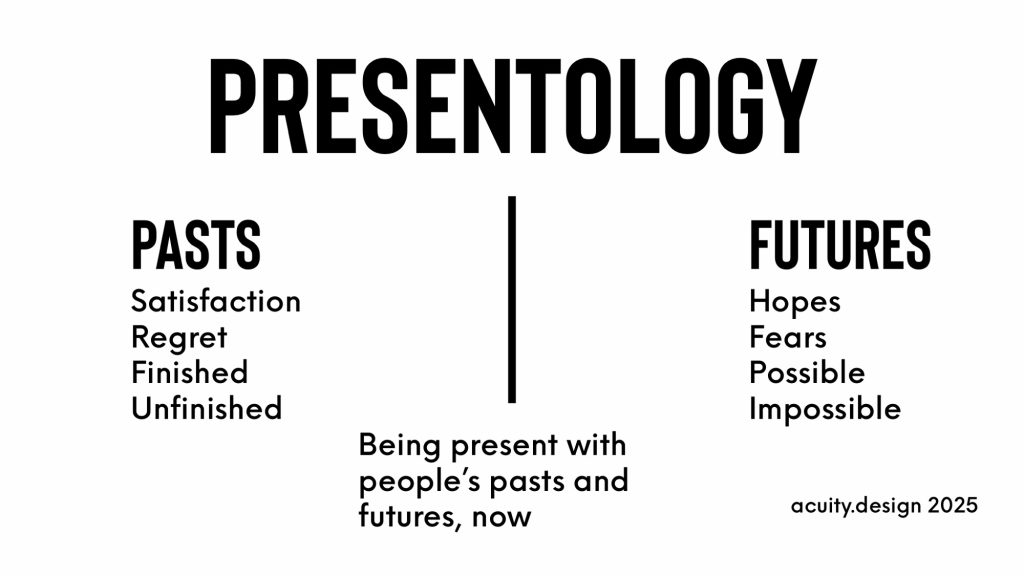
    Test diagram with being present with people’s pasts and futures in the present
    Alastair Somerville, 2025

    Conversations lately about projects that are trying to build hopeful futures (one from a massive new infrastructure sense and one from a local community mutuality sense) has led back to some ideas from civic assembly and design in the climate crisis workshops.

    What concerns me is the Futurology bias of the processes. How the chosen perspectives are so structured to tightly focussing people and systems to both imagining and planning futures.

    A history of regret

    What this future bias creates is a crack in the foundations of all the plans. Without encountering and exploring the pasts, personal and institutional, there are shadows of regrets and resentments that poison the present and any capacity to imagine or plan futures.

    From civic assembly work, it was clear that the deliberation process needed to first hear and absorb the people’s memories of lost futures. The promised changes and technologies that would have made their lives today better then they actually are. All those promises by politicians and prototypes made by technologists that were never fulfilled and no one explained why. Past hopes and futurology narratives can become the rich soil of right-wing resentment farming. The basis for some of that regret radicalisation in the UK can be found in the White Heat of Technology dreams of the left.
    photo of green leaf plant emerging from brown soil

    Futurology and hopeful design ideas will fail if they focus on futures and don’t engage with the history of regrets.

    Presentology

    Being present with people’s pasts and futures, now

    The idea of Presentology plays upon two senses of Present.

    • The sense of time: being explicit about anchoring people to their extraordinary human capacities to time travel to pasts and futures thru memory and imagination. The use of Autonoetic Consciousness to feel embodied in different time periods.
    • The sense of physicality: being explicit about together as humans. There is power in speaking out loud about hopes and regrets with other people. Hearing yourself and being heard by others. Being taken seriously by people who are serious. Being honest about what was lost with people who can explain why (without simply blaming some Other).

    Storytelling is important but too many professionals and organisations seem to view themselves as the main author and people as the audience.

    Stories are strong. This is the reason Design Fictions and narrative techniques are used in Futurology to imagine new possibilities and innovations.

    However, it is that strength that haunts the present. Those institutional stories told and never finished. Those personal stories built up from childhood but never told and never listened to.

    Holding both the past and future in the present

    This is Presentology: using institutional power and capability to hold a space for people’s pasts and futures in the future present.

    It will be hard because resentment and regret deserve honest replies.

    Organisations must be willing to explain and take responsibility for lost hopes and crushed dreams. Sometimes it will be because people stop noticing what was fixed and what needs were satisfied. Sometimes it will be because what changed was systemically necessary but personally or communally painful.

    Yet without these conversations, how can futures be truthful and well founded?

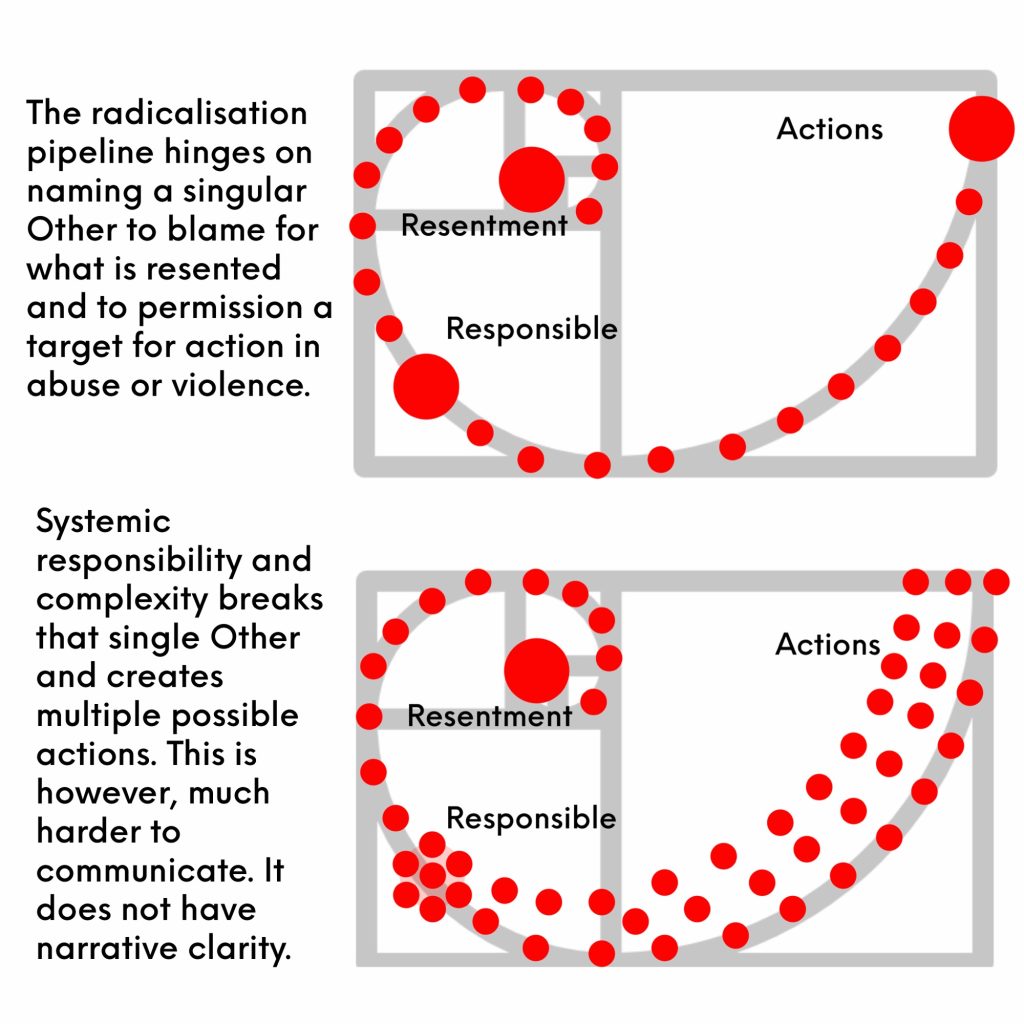
    The right proves daily the power of their core narrative pattern. Taking resentments, naming an Other as responsible and permissioning action as restorative revenge.

    We cannot build better futures without taking the fuel of past promises and hopes away from populists and authoritarians.

    I’m happy to chat about Presentology and specific techniques. Either comment or contact me.

  • Ask Questions clearly in Civic Assemblies

    Diagram on the process from defining a question to enacting decisions.
    Alastair Somerville, 2025

    The hard work of Civic Assembly projects is getting institutions to actually think about questions that are answerable and actionable.

    There is no point starting out on a project that will provide no additional clarity or which will never have any actual consequences.

    In setting the question(s), the institution must ask itself how it will enable the process of debate/decision-making and then how it will enact any ideas and decisions made.

    Do not use a civic assembly if these issues are not thoroughly dealt with by the staff of the institution. The failure of assemblies is more in this lack of alignment at the start than anything the assembly members say or do.

    People want to be asked and want to do things that matter. Without clarity about questions and actions, they can feel betrayed by the process.

    Ask us to help

    This kind of clarity of purpose is what we have provided in projects in both the UK and EU.

    Ask about how to do this, contact me for a chat.

  • Walking Back To Hope

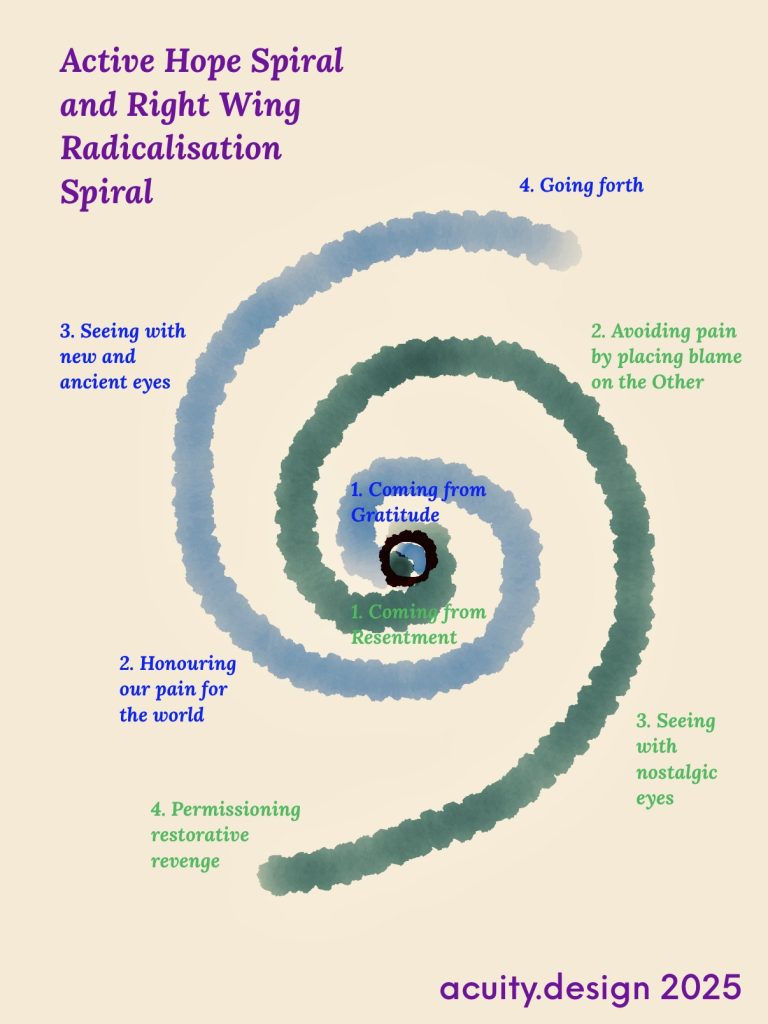
    Spirals diagram - one of hope that is rooted in gratitude and honouring pain. One in resentment and seeking to avoid pain by blaming an other.
    Alastair Somerville, 2025

    I attended an Active Hope workshop yesterday run by Linda Aspey. It’s a theory I had not encountered before. I was looking for a clearly communicable story of positive hope.

    ‘Better stories’ is often mentioned when people worry about the current preponderance of doom or authoritarian narratives. What they mean by ‘better’ can be a bit vague though so I do keep looking. More direct, more emotionally-centred and less overwhelmed by explanations seem to be factors. Active Hope seemed to offer that.

    The Spiral of Active Hope

    There is a spiral pattern in Active Hope that roots hope in personal gratitude and honouring pain.

    The latter point is interesting after attending a Systemic Constellation workshop earlier in the week. Feeling, holding and releasing trauma and pain passed thru generations is something that comes up in that methodology.

    Feeling gratitude and feeling pain (as basis of feeling compassion) is important.

    The Active Hope spiral does ‘fix’ a problem with a lot of Futurology techniques that forget the past and fail to root the future in the breadth of human feelings. I wrote about that issue in post called Presentology.

    The other spiral

    Due to civic assembly work in last few years, I could not help noticing that the spiral seemed to have some similarities to the Right-Wing Radicalisation narrative noted in books like Disaster Nationalism.

    There are spirals in my posts describing that process and how breaking the spirals may help. This one on the Acuity Design site Narrative of Rage contains some such diagrams.

    That the Active Hope spiral resembles the Right Wing Radicalisation spiral is, ironically, proof that it is a useful narrative model for now. The Right are succeeding with their short, emotional stories of immigration and lost communities. If there is an alternative path that leads to hope not hate then that is good.

    Walking back to Gratitude

    Highlighting the parts of the two spirals and how they match up narratively and emotionally
    Alastair Somerville, 2025

    The diagram in this post is also like the double spiral I encounter each year at Winter Solstice in Stroud.

    There are paths rooted in the centre – rooted in the person and their movement thru time. One from gratitude and one from resentment. They lead to different futures. One of hope, one of violence.

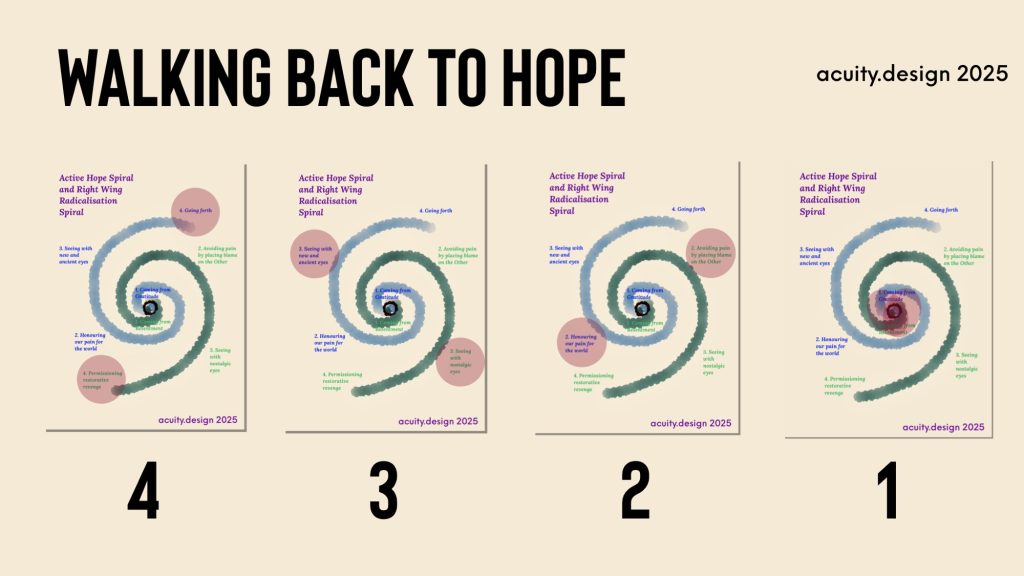
    What I think about now is that it might be possible to walk people backwards thru the spiral.

    Back from the radicalisation, back to their heart and back onto a path that starts in what they appreciate and feel glad about.

    Recognising two paths means we can encounter people where they are and accompany them back to where they need to be. We do not deny their experiences but do actively question why they are on a path leading to violence not communal hope.

    To finish, here are some possible questions to ask while walking back from hate and othering to gratitude and hope:

    • Why is your solution an act of violence?
    • Why is your perspective so tightly nostalgic about a lost past?
    • Why do you place blame for pain on an Other and not honour the pain of your community and ancestors
    • Why do you root your sense of self in resentment not gladness?
  • Hope, in the past and future

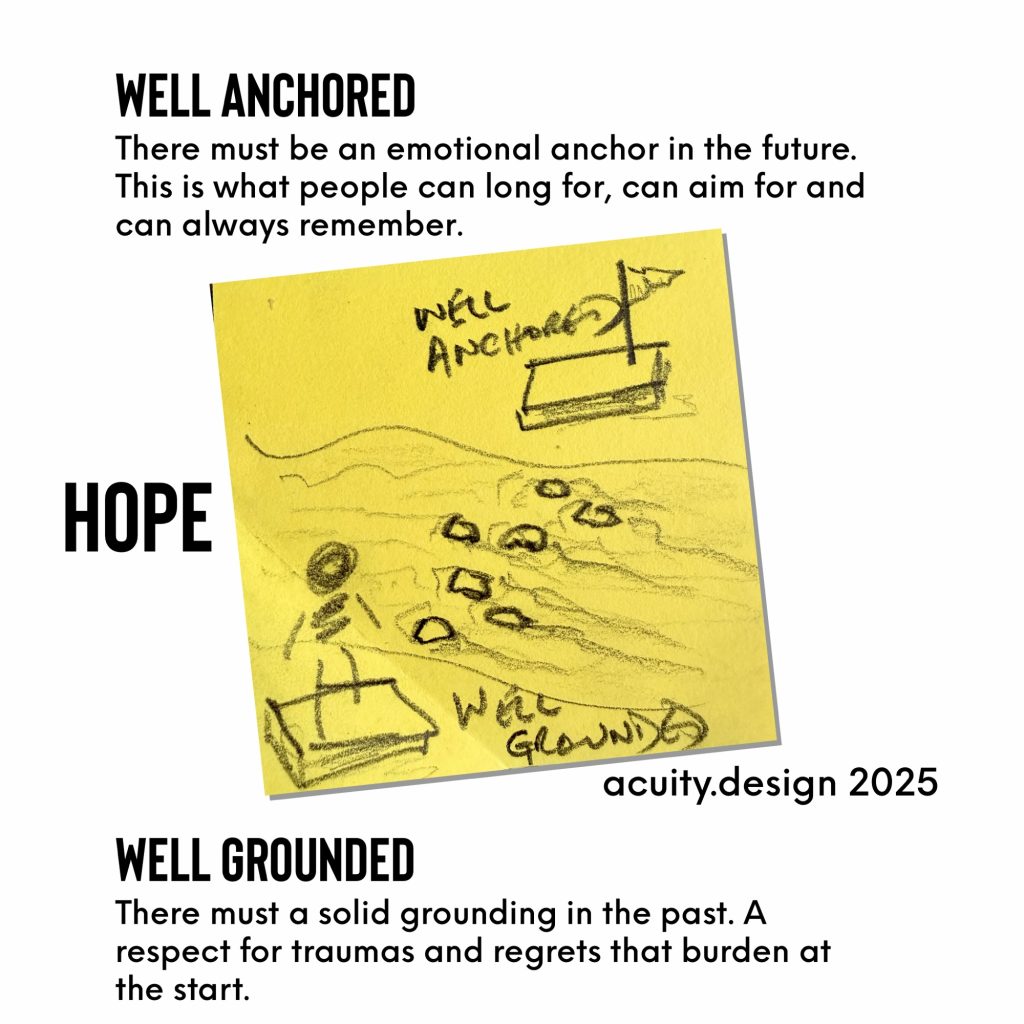
    Post it note sketch of person about to cross a river. They stand on a block titled Well Grounded and look over to a flag called Well Anchored
    Alastair Somerville, 2025

    Talking with prospective client about some workshops about Hope, resentment and public engagement.

    The above image is just a sketch of two ideas needed to enable hope.

    Well Grounded

    There must a solid grounding in the past. A respect for traumas and regrets that burden at the start.

    There is a need to go backwards to go forwards. There is a bias in Futurology that is similar to one found when people get lost.

    Lost people plunge forward, they keep moving. Yet the solution is to stop, to rest and to go back to where they knew where they were.

    To imagine hopeful futures, we need to go back. To dig into the foundations of the present to find what we stand on.

    We need to recognise and honour the traumas that past generations suffered. We need to reveal what burdens we carry in the present that were passed onto us from our ancestors.

    We need to be well grounded and in that we need not merely confidence about our presents but knowledge and acceptance of our pasts.

    This is Alignment

    People need to know where they start from

    Well Anchored

    There must be an emotional anchor in the future.

    This is what people can long for, can aim for and can always remember.

    The imagination of new futures, hopeful futures need a strong anchor. It is this that secures people in their actions in the present and helps pull them into the futures.

    The core of the anchor is emotion.

    We need to know what the future feels like. This is the soul of any plan. Technologies, people and methods change thru time. Process and management is not enough. There has to be feeling for people to keep longing and keep trying to be in the imagined futures.

    Establishing what people feel at the start about the future is how a hopeful project (or any project) is anchored.

    So we need to be well grounded and well anchored. Respecting our pasts and feeling for our futures.

    This is Boundaries

    People need to sense the edges of the place they are imagining
  • Three What If’s for 2026

    This is a post based on books and ideas I encountered in 2025 that I want to take into 2026.

    This is mostly about hope and community but starts with regret and resentment.

    What if…you felt both regret and hope?

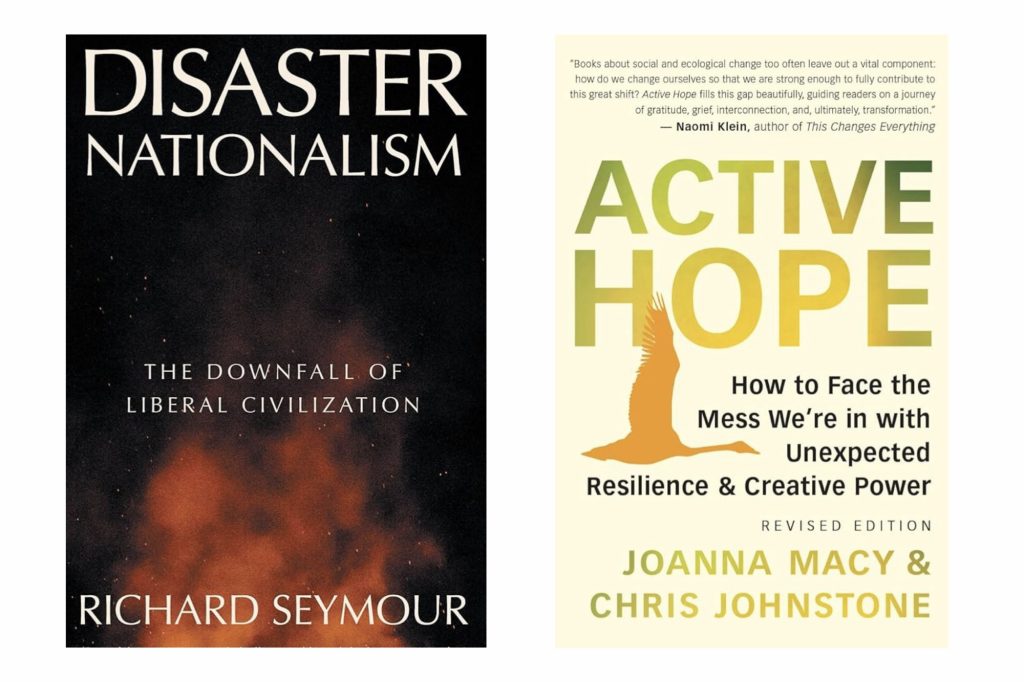
    Flaming smoke cover of Disaster Nationalism and flying bird on Active Hope

    I started 2025 reading Richard Seymour’s Disaster Nationalism. It is a good book on how we got to here. It was most useful to me for clarifying the strong narrative pathway that the Right use to recruit and radicalise people. A narrative drawing power from lost pasts and promises made by liberals. The resentments and regrets that people may validly feel today but clarified and simplified by naming and blaming an Other who can then attacked.

    The narrative spiral of radicalisation and possible ways of intervening using systems thinking
    Alastair Somerville, 2025

    For most of 2025, I kept looking at this narrative and trying to imagine useful interventions. I have worked on a few projects around story telling, civic assemblies, systemic thinking and imagining hopeful futures. How clear the radicalisation narrative is compared to those complex explanations is very apparent.

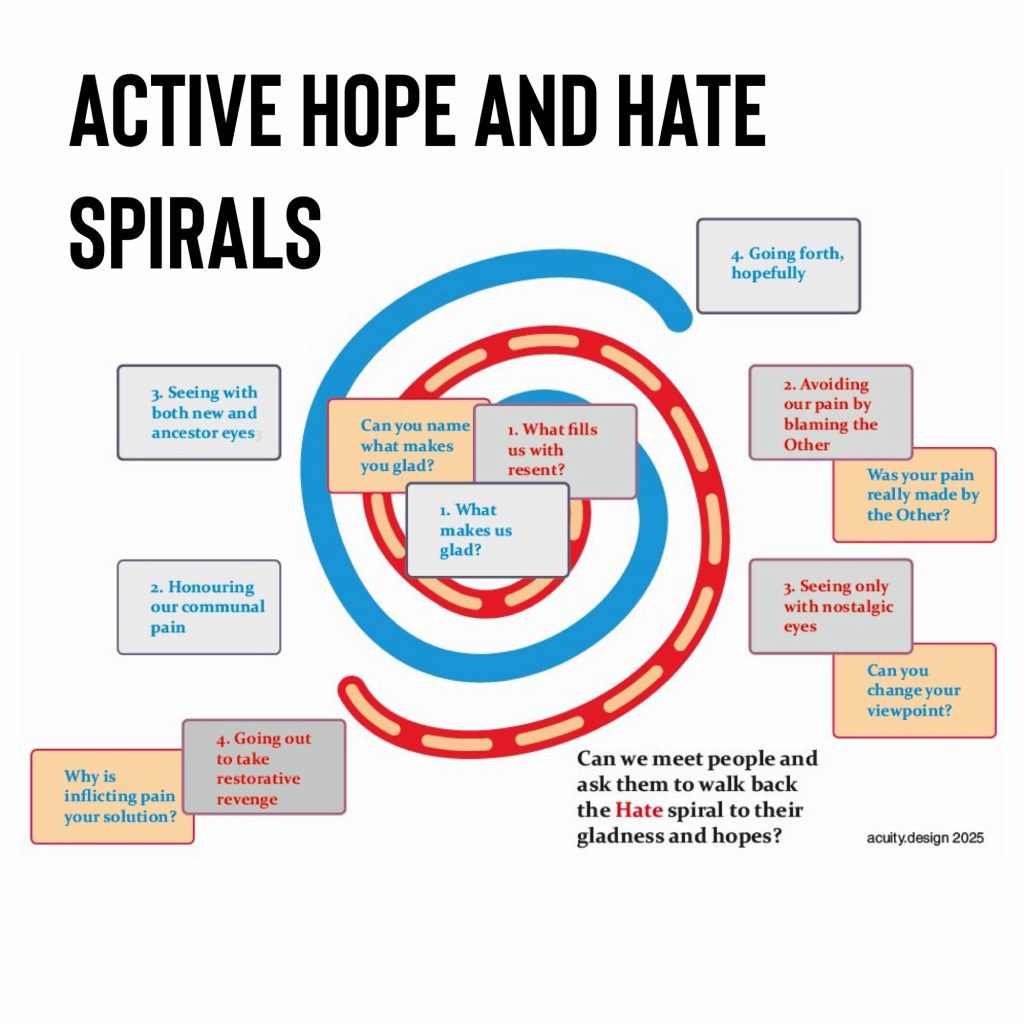
    Near the end of the year, there was a post to the local Stroud Climate Collapse group about a one-day online workshop on Active Hope. I attended it and found it helpful (possibly not in the way that the facilitator intended). What the ideas in the Joanna Macy book showed me was there was another narrative that was positive and still rooted itself in memory and pain.

    The diagram below interconnects the two narratives and adds in some interventions questions. It is founded in emotion and pasts but moves thru making the bad and the painful explicit. For people using Active Hope, this is a practice of honesty before imagining hopes. For people walking towards radicalisation, it is an intervention of being present with peoples’ sense of regret and making the histories apparent. In both, the past needs to be seen in the present for hope in the future.

    Over 2025, I have also been attending Constellation Therapy sessions which are a form of facilitated communal experience to help individuals understand better how their current problems may well be rooted in past traumas of their ancestors and their societies. It is an interesting form of therapy which uses the power of being together to explore problems.

    A double spiral of Active Hope and right wing radicalisation
    Alastair Somerville, 2025

    I have written a few posts this year on the need to go backwards to go forwards and the first What If? is based on these ideas.

    What if you talk and share together the unfufilled promises and regrets before starting on imagining new futures and innovations. These foundations are being exploited by the Right to create their futures of violence towards the Others they name. We can take that fuel away from them and take people away from that narrative path.

    What if…you longed for the future?

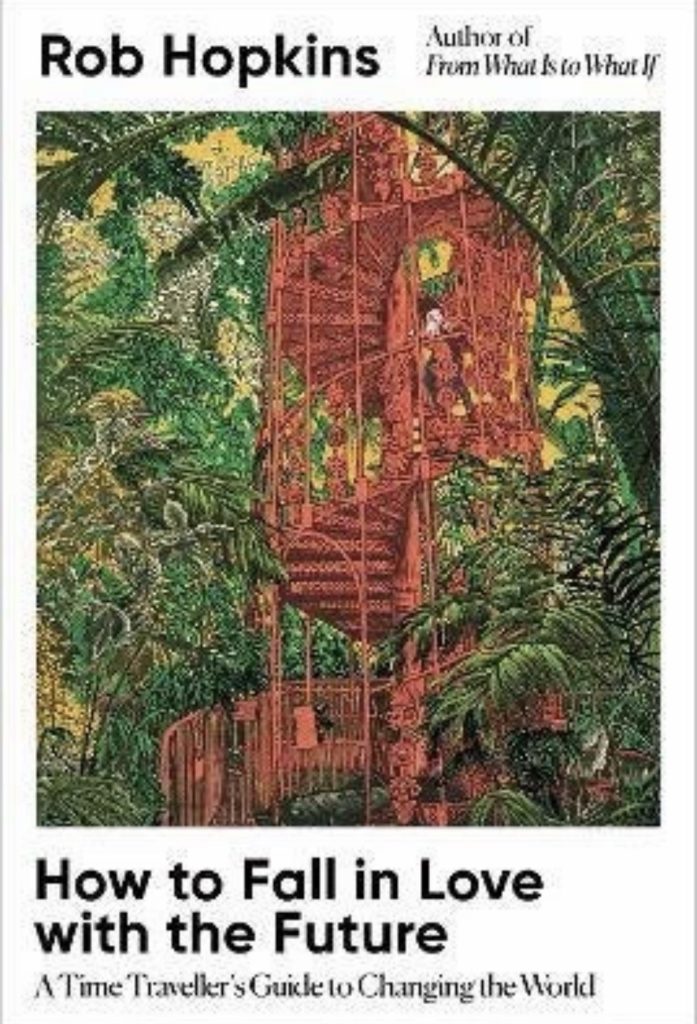
    Cover image of a spiral staircase in a jungled perhaps in a Victorian glasshouse?

    In the middle of the year, I read a new book by, and also attended a talk by, Rob Hopkins about time travel. What he was discussing was a technique of using a narrative form of not merely imagining hopeful futures but speaking and acting as if you had been in them. This technique was based on breaking thru the rather stilted futurology of liberal futures (all systems and data) and feeling the actual sense of gladness to be living in a better future.

    More than the temporal technique, what I found helpful was the central ideal of Longing in all this. A longing to be in the future. A desire to have a role, a place and a community in that future. Many narratives about the future are caught up in Doomism: a future that is bad and in which you have no role apart from witnessing suffering. Again, this is something done better by the Right: they do not offer practical solutions but they do offer roles, uniforms and a gang of people who share your sense of pain and the authoritarian permission to inflict restorative revenge.

    Near the end of the year, I heard Rhiannon Hughes talk about her research on anarchism and community support in disasters like Hurricane Sandy and Covid19. One thing she mentioned is the importance of a rupture in the typical process to enable imaging a different way of working together. This was the idea of needing an Outside. We all live within the places and communities that we have seen and expect to see. Sometimes we need to be unfooted or given a shoogle to see round the edges of the typical and imagine the different. Disaster is one way of breaking that wall. Narratives of travelling into better times is another.

    What if you imagined and shared stories of future times that you want to be part of? What if people wanted to start today on making futures that they, or people they know, can have a place, a role and a sense of longing to be in?

    What if…you asked?

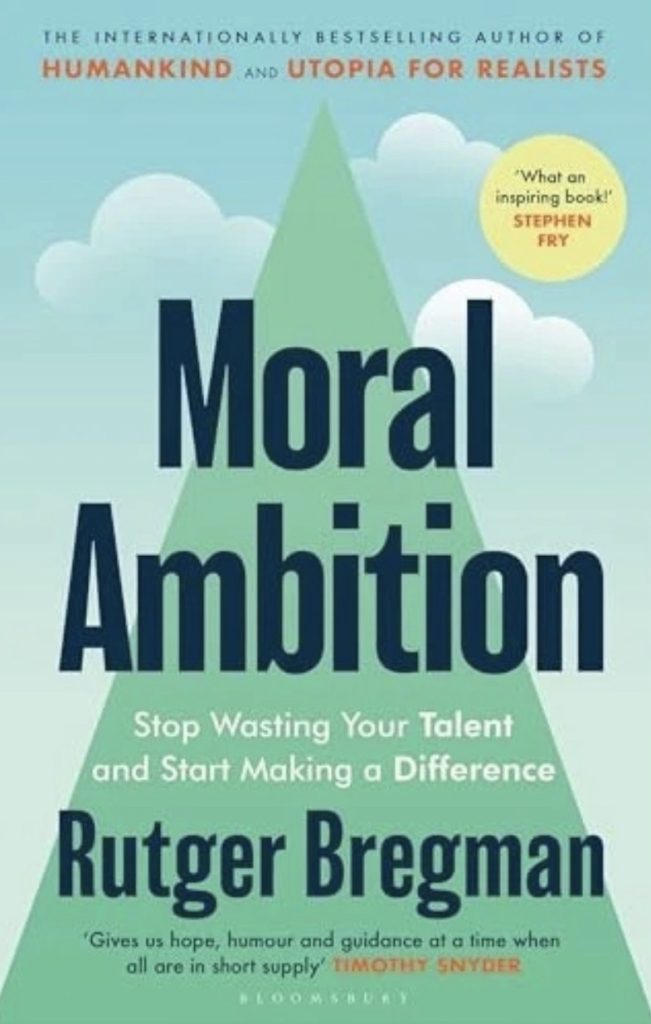
    Cover image of a green mountain with clouds behind it

    Finally, Rutger Bregman’s latest book (and series of Reith Lectures) on Moral Ambition. Again, it has very large goal but it was the smaller parts I found interesting.

    There is section where the history of the Holocaust in the Netherlands is described and how the actions of one man helped save many people. What was powerful was how he enabled community action by asking for help. Later in the year I came across Active Bystander theory and this linked up. What people sometimes need is to be asked: to use their personal capacities or to work with others to build community capabilities.

    This sense of asking when facing enormous or fearful problems is powerful. Arnold Douwes, in the Netherlands, bicycled from house to house asking people to take in and hide Jewish refugees. People said yes because they were asked. In many places, many people were never asked and thus never acted.

    Asking matters cards - ask to help and ask for help
    Alish astair Somerville, 2025

    What if you asked for help as well as asking to help? What problems could be helped with if you set aside time to talk to a person who has capacities you do not or could work with you to create capabilities that do not exist.

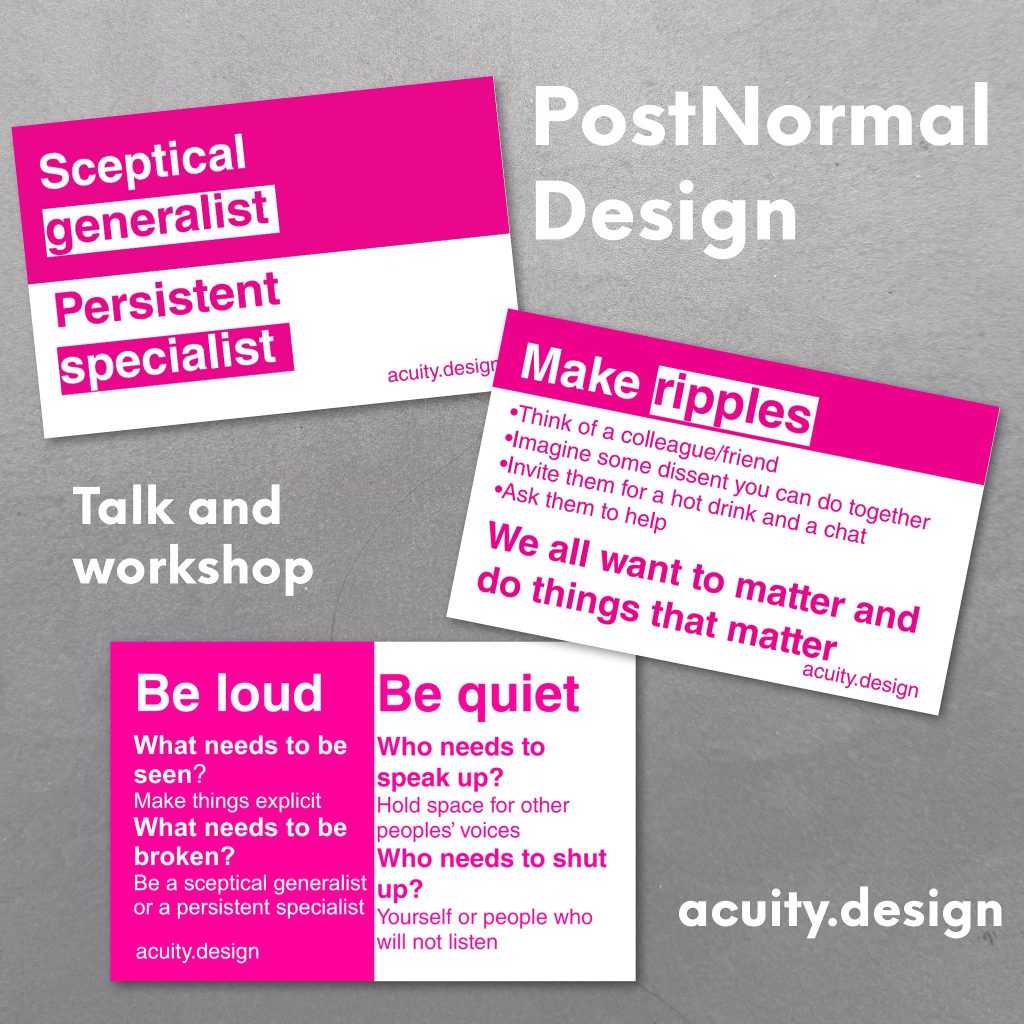
    I did a talk in the middle of the year at CampDigital on Post Normal Design and realised afterwards that the Bregman book was relevant. That the ideas of breaking consensus and fracturing common beliefs were also about asking. Asking for help to do things that matter and, in gaining that help, to find a sense of shared agency in feeling that you all matter.

    PostNormal design cards with themes of asking for help

    Have a good 2026, I hope to be doing some projects that use these ideas.

    If they interest you, do let me know. I am asking for help: for better futures for all and for less violence towards the weak and excluded.